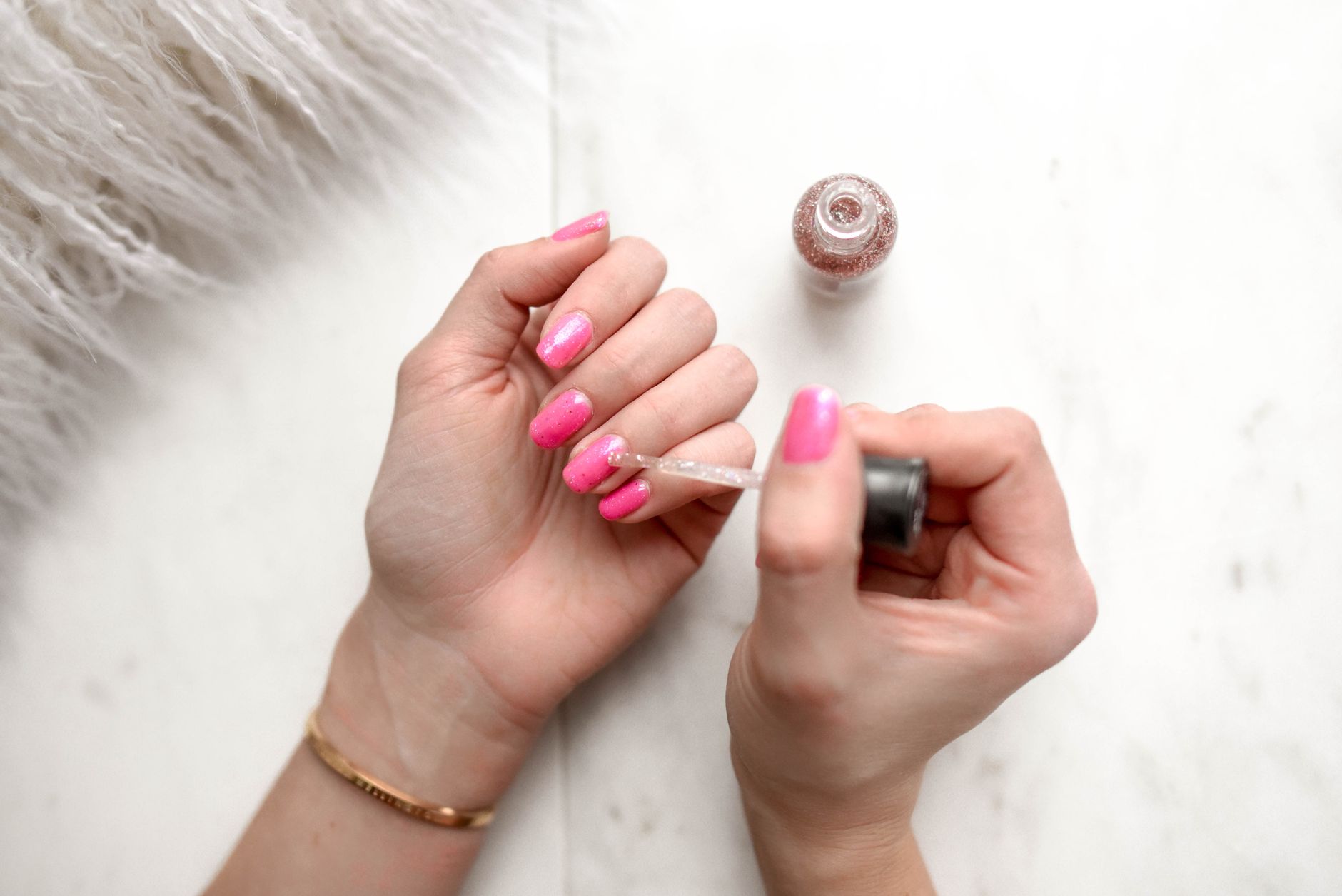
The free edge of the nail is the part that grows past the fingertip, in other words, the part that you can actually cut and access to clean under. It’s the part that people trim, file, or shape.
It is called the free edge because it is not attached to the nail bed, as the rest of the nail is.
What Does ‘Free Edge’ Mean?
A free edge is the grown out tip of the nail and is the part that you would cut or file down to shorten and tidy your nails. Unlike most of the nail plate, the free edge is not attached to the nail bed. It often looks white, clear, or slightly translucent, unless it has been cut very short.
A free edge exists on both finger and toe nails.
Where is the Free Edge of the Nail?
At the very top of the nail; unless your nails are very short, you will notice a white strip that stands out from the rest of the pink nail.
Is the Free Edge the Same as the Nail Tip?
In practice, yes. People usually say ‘tip’ when they mean free edge. However, the ‘free edge’ is a more precise, anatomical term.
Why is the Free Edge Important?
The free edge affects the shape of the nail and it is the part that is most likely to split, break, or catch on things. It is important because its length determines how long your nails look; you cannot shorten the rest of the nail plate!
Being able to control how long the nail is is an essential part of the manicure process, and is important for gel polish, acrylics, and press-on nails.
How Should You Care for the Free Edge?
There are several things you can do to help look after the free edge of your nails:
- File gently in one direction if your nails are prone to splitting.
- Avoid using the free edge as a tool to open things.
- Keep it smooth to avoid snagging.
- Trim toenail edges straight across to reduce the risk of pain in the corners.
- Use cuticle oil or hand cream to aid flexibility.
What Causes the Free Edge to Split or Peel?
There are several usual culprits here:
- Dry nails
- Repeated water exposure
- Overly-harsh removal chemicals
- Filing too aggressively
- Biting or picking
- Nail trauma
- Very thin or weak nails
Can You Paint Over the Free Edge?
Yes, you can. Painting over or ‘sealing’ the free edge with polish or a top coat is very helpful in reducing chipping.
Free Edge vs Other Parts of the Nail
- Free Edge– The part of the nail that grows past the fingertip.
- Nail Plate– The hard, visible nail.
- Nail Bed– The skin that lies underneath the nail plate.
- Cuticle Area– The skin around the base of the nail.
- Lunula– The pale half-moon shape at the base of some nails.
FAQs
Is the free edge dead nail?
Yes, it is. The nail plate is made out of hardened keratin and doesn’t have nerves. This is why it doesn’t hurt when you cut your nails.
Why is my free edge white?
The free edge usually looks white because it isn’t attached to the nailbed.
Should I cut the free edge off?
You can trim or file it to shorten it, but you don’t need to remove the whole free edge.
Does everyone have a free edge?
Yes, although some people may have little if they have trimmed their nails very short.
Final Thoughts
The free edge is just the part of the nail that extends beyond the fingertip; it’s the part that you trim, cut, or file. It’s a good idea to keep it smooth in order to avoid chips and snags.